
EDITORIAL
REFORM REVERSED
Equip Before We Shift
The Sox Journos
Highlights
- Introducing a trimester system may require tighter scheduling and potential expansion of sections.
- DepEd must prioritize infrastructure expansion, allocate sufficient funding, hire and train more teachers, and ensure curriculum readiness before fully implementing the trimester structure.
- Without facilities and funding, the trimester system risks becoming another ambitious initiative that serves as a destruction rather than a solution.
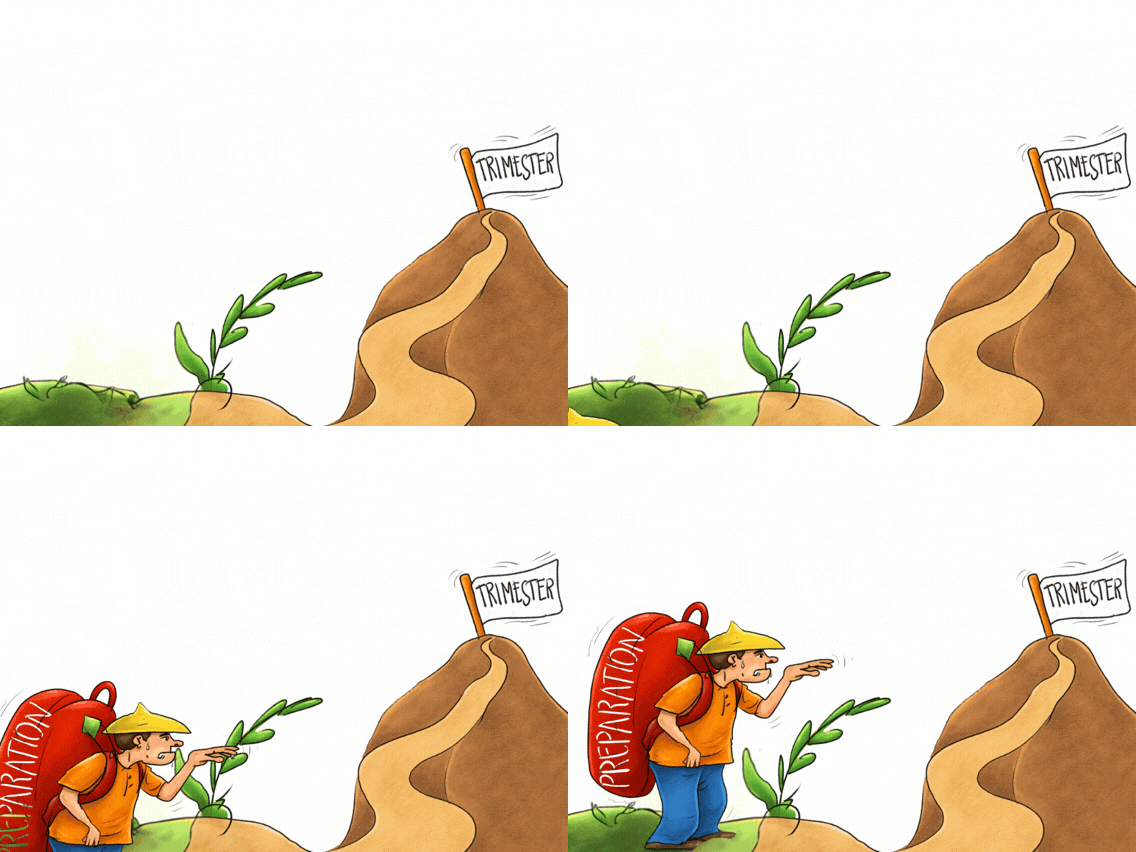
Our country once again stands at the edge of educational reform. The proposed shift to a trimester system by the Department of Education (DepEd) is presented as a progressive step toward academic balance and recovery. However, a promise without preparation is not a progression, rather a failure in our education. No matter how appealing the reform is, it cannot thrive in a system that lacks resources to sustain it.
During the Regional Schools Press Conference (RSPC) 2026 press briefing, Assistant Principal Agnes Y. De Guzman, Ed.D. highlights the proposed trimester system promoted by the DepEd that aims to improve curriculum delivery. The idea of dividing the academic year into three terms suggests modernization. But beneath this structural adjustment our schools aren’t equipped for the sudden shift.
Some schools rely on shifting schedules and temporary spaces to manage enrollment. Across the country, classroom shortages remain unresolved.
According to the news, many public schools continue to operate beyond capacity, accommodating an estimated 45 up to 50 students squeezed in a room made for 40 students only. Introducing a trimester system may require tighter scheduling and potential expansion of sections. Moreover, without additional classrooms and facilities, the calendar change risks compressing students further into already strained spaces.
Read More: Classroom shortage sa Pilipinas umabot na sa 148,000 | ABS-CBN News
Infrastructure cannot adjust as quickly as policy announcements do.
Beyond the physical limitations the burden was on teachers. They already shoulder overwhelming responsibilities, such as large class populations and remedial programs. As for De Guzman, trimester structure demands quicker lesson pacing and more frequent assessments. The workload does not disappear, it intensifies within a shorter span.
Read More: DepEd proposes trimester system under holistic school calendar
Curriculum adjustment also presents a challenge. Dividing the academic year is not as simple as slicing months into three equal parts. Learning competencies must be adjusted. Subject sequencing must be reorganized. Teachers must be equipped with new guides and training. If rushed, this compression may sacrifice depth for speed, leaving students covering lessons faster but understanding them less.
Read More: Concerns about DepEd’s proposed trimester school year
Some might say that a trimester system may reduce burnout and create flexibility in managing disruptions. They claim it aligns with global standards and offers opportunities for academic recalibration. Yes, it is right, however, structural imitation without systemic strengthening is not sufficient. The success of any calendar reform depends not on its format but on the foundation of it.
Schools have long struggled with overcrowded classrooms and insufficient resources. Changing the calendar does not automatically resolve these enduring concerns. Without facilities and funding, the trimester system risks becoming another ambitious initiative that serves as a destruction rather than a solution.
The trimester system is not a rejected reform, but the DepEd must prepare for it responsibly. DepEd must prioritize infrastructure expansion, allocate sufficient funding, hire and train more teachers, and ensure curriculum readiness before fully implementing the trimester structure. Policymakers must ground innovation that suits the schools capacity. Schools must be strengthened before they are restructured.
If education is to truly advance, preparation must put first before proclamation. And by that structural change becomes a meaningful transformation rather than another strained adjustment in an already burdened system.
HONEST
OPINION

Break Chains, Not Minds
Building Construction | Opinion Writer
I watch students every day, dragging themselves into classrooms like soldiers returning to a battlefield they never volunteered for. Eyes hollow and patience thin. Motivation hanging by a thread. And for teachers? They’re not teaching, they’re surviving. The current education system stretches pressure across months so long it stops being academic rigor and starts being psychological torture.

triMESSter System
Building Construction | Opinion Writer
I witness student journalists every day, laptops open and pens scribbling. The so called breaks that are supposed to let them breathe and recharge are filled with training and deadlines. The trimester system was sold as a mental health intervention, yet these students’ downtime is swallowed whole by obligations that feel more like punishment than preparation.